Infrastructure |
 Healthy Mineral Spring Waters Saratoga Springs, NY - Balneology - Geology - History Underground mineral spring waters made Saratoga Springs and Balston Spa famous health resorts. Geological realities including glacial Lake Albany led to mineral water springs and, for a brief period, a premier New York State spa resort .
|
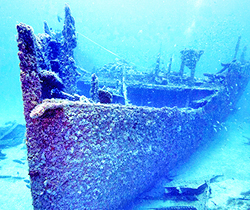
Sunken Ships - A Pollution Threat Thousands of ships sank in U.S. coastal waters in the past 120 years. NOAA's Under Sea Threats Programs known as RUST and RULET administered by the U.S. Coast Guard identifies them and watches for delayed pollution. In 2019, the recovery of 450,000 gallons of oil from a sunken ship torpedoed in 1942 off Long Island, New York averted a major pollution incident.
|
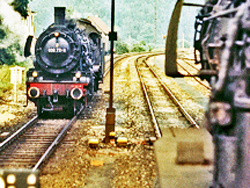 Farewell to Germany's Steam Railroads Europe's steam locomotives phased out in the 1960s. Enjoy the remaining locomotives in 1972 based in Tübingen, Germany. Enjoy the Video of two operating steam locomotives.
|
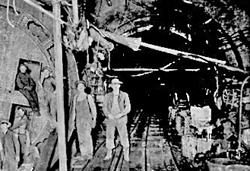 Building A Underwater Railroad Tunnel 117 Years Ago the first railroad tunnels under the Hudson River were completed. The Hudson Tubes were the first mass transit rail connections between New Jersey and New York City.
|
 High Speed Passenger Rail
European and Asian investments and technologies created fast environmently clean HSR passenger trains safely carrying millions of people daily. Fast, clean trains are creating a better future worldwide.
|
___________________________________________ |
The Great War - 1914 to 1918 |
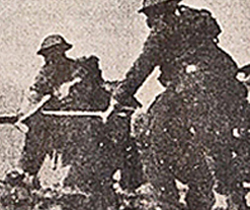 War in the Trenches
To all soldiers the word Trenches meant sacrifices. Trenches at Gallipoli, Turkey and hundreds of miles of trenches across Belgium and France were World War 1's battlefields. The histories of the soldiers from all the countries who fought there have been kept alive by preserved diaries, wartime documents, memories, stories, maps and photos.
|
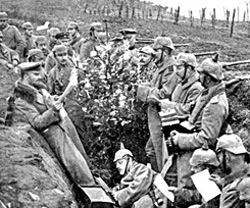 Silent Night in the Trenches World War One was 146 days old when many German, French and British ordinary soldiers in the trenches recognized the futility of man against machine guns and high explosive shells. That Christmas Eve 1914 the guns in some areas fell silent replaced by Christmas songs in French, German and English. Soldiers peacefully met enemy soldiers in No-Mans Land.
|
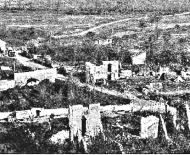 Americans At the Front American Expeditionary Force (AEF) soldiers arrived at the Western Front including the Fifty-Third Field Artillery Brigade. Among them were units deployed after arrival in France on the active front line duty supporting infantry units of the 28th Division at Mezy on the Vesle River on August 2, 1918.
|
The Great War At
Sea |
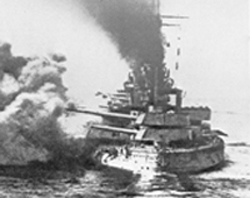
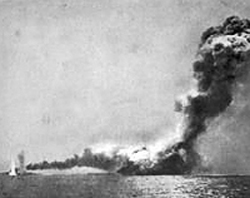
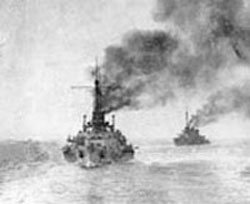 Turkey's successful defense against the British and French navies in the Dardanelles and German - British naval battles at Coronel, the Falkland Islands and Dogger Bank were important strategic naval events. The two day battle of Jutland with 261 warships ended in stalemate. The bravery of the sailors was never in doubt but thousands of sailors' lives were lost in part by poor planning at high levels. Sunken warships located 105 years later are still answering many historical questions. Turkey's successful defense against the British and French navies in the Dardanelles and German - British naval battles at Coronel, the Falkland Islands and Dogger Bank were important strategic naval events. The two day battle of Jutland with 261 warships ended in stalemate. The bravery of the sailors was never in doubt but thousands of sailors' lives were lost in part by poor planning at high levels. Sunken warships located 105 years later are still answering many historical questions.
|
Remembering The Missing In Action |
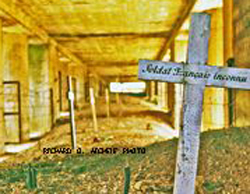 Millions of men during the Great War were sent to the Western Front battlefields. Hundreds of thousands of those soldiers completely disappeared. One incident: A French trench walls collapsed instantaneously leaving only the soldiers' rifle barrels protruding and it became the Trench of the Bayonets memorial." This Remembering the Missing website commemorates all the missing in action on land and at sea of all nations. Millions of men during the Great War were sent to the Western Front battlefields. Hundreds of thousands of those soldiers completely disappeared. One incident: A French trench walls collapsed instantaneously leaving only the soldiers' rifle barrels protruding and it became the Trench of the Bayonets memorial." This Remembering the Missing website commemorates all the missing in action on land and at sea of all nations.
|
___________________________________________ |

|
|

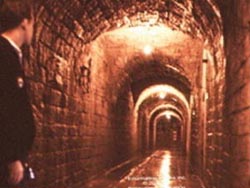 Then Peaceful - But, not 50 Years Earlier. This veteran returned in 1964 to visit World War 1 Western Front battlefields in peacetime where 50 years earlier he served on the front lines for three years and was wounded.; As he walked those quiet battlefields where millions of young soldiers died, he often quietly remarked, "And for what?"
  The French 1999 Comtec Report detailing UFO interactions. Role of Wormholes UFO Technologies. UAPs and the Black Knight UFOs. Galactic role of the ET Arcturians.
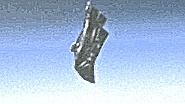 ET Beings UAPs and UFOs are Here and Real. ET UFOs travel regularly through interstellar space. Peru's Nazca Lines. Space Wormholes. Impressive ET Technologies.